
No time to read the full article? Here are my favourite picks..
· Grab a 10–15% discount when you sign up to Airalo for an Austria ready eSIM. Super easy and no roaming surprises.
· If you ever get the chance, spend Christmas in Austria, the festive markets are pure magic.
· Need a place to stay? Booking.com has a massive range of options, from cozy chalets to city hotels.
Introduction to Austria
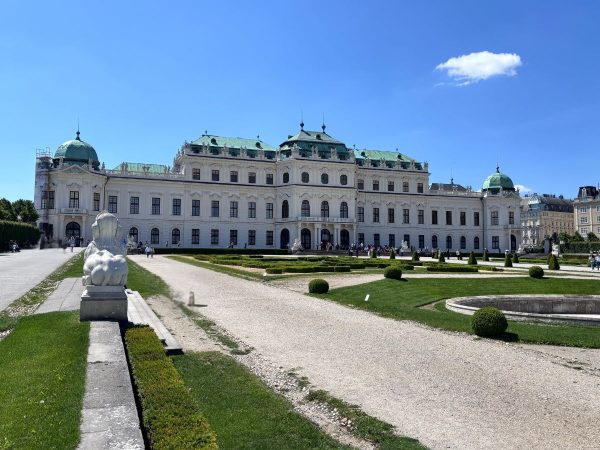
We almost didn’t go to Austria.
We had Greece planned, Croatia mapped out, and a loose idea that Slovenia would slot in somewhere. Austria felt like a detour — something we’d save for another trip. Then a friend said something that stopped me: *”You’ll spend one night in Vienna and immediately wish you’d booked two weeks.”*
She was right. We ended up loving every minute of it.
Austria turned out to be one of those rare places that works at every speed. When we wanted energy, Vienna delivered, coffee houses, museums, Christmas markets that looked like they’d been designed by someone with a very generous snow globe budget. When we wanted quiet, the Alps were right there, wide open and extraordinary. And when we wanted to feel like we were actually living somewhere rather than just photographing it, places like Salzburg and Hallstatt gave us that too.
In this guide, I’m going to share everything we’ve learned about travelling Austria as slow travellers, where to go, when to go, how to get around, what to eat, and how to make an extended stay in Austria actually work practically and financially. Whether you’re planning a couple of weeks or a full three months, this is the guide that will save you time, money, and a few of the mistakes we made along the way.
Here’s what we’re covering:
– **Where to go in Austria** — from Vienna’s grand boulevards to the fairy-tale villages of the Hallstatt
– **How to get around** — trains, car hire, and the monthly transport pass that changed everything for us
– **The practical stuff** — cost of living, accommodation options, Schengen rules, and staying connected
With those basics covered, here’s what you need to know.
A Little Bit of Everything

Austria is the perfect blend of old-world charm and modern ease. Love history?
Get lost in baroque palaces, medieval castles, and world class museums. More into nature?
The Alps are practically yodelling your name, offering everything from skiing and tobogganing in winter to scenic hikes in summer.
And if you’re a foodie, you’ll want to make a personal mission out of trying every type of schnitzel and strudel you can find.
Big City Buzz, Small Town Charm
Vienna is an absolute dream, clean, safe, packed with art, music, and endless events. The Christmas markets? Straight out of a snow globe.
The summer river swims? Unbeatable, there was a great water slide on the side of the Danube, I wonder if it’s still there.
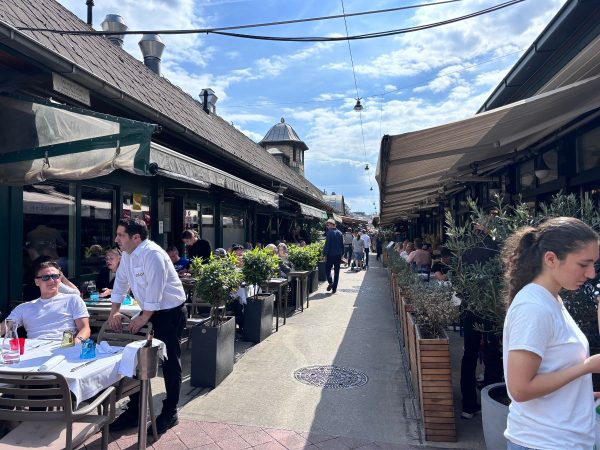
Or foloow our example enjoying a macachino and crausaint at the Naschmarkt big food each morning.
But beyond the capital, there’s Salzburg (hello, Sound of Music fans), Graz with its laid-back vibe, and Hallstatt for jaw-dropping Alpine and lake views.
And since public transport is top-notch, you can explore it all with ease.
A Great Place to Live (even for a few months), Not Just Visit
Unlike a whirlwind vacation, three months in Austria lets you slow down and experience life like a local.
Grab a monatskarte (monthly transport pass), learn a few German phrases (the locals appreciate the effort), and settle into the rhythm of Austrian life, where coffee breaks are sacred, and the mountains are always within reach.
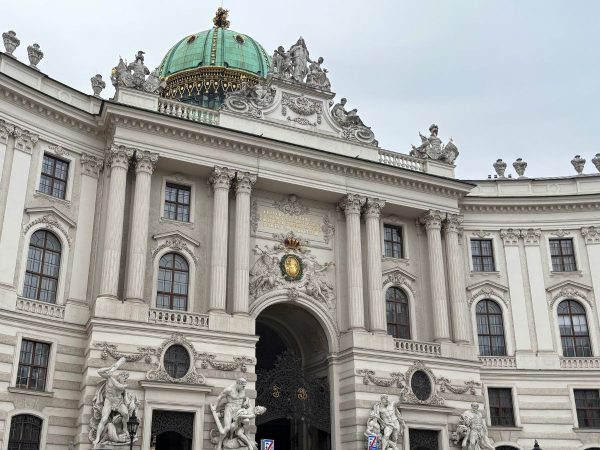
Trust me, three months here will leave you wondering: why didn’t I stay longer?
Geography of Austria
Austria is like a postcard come to life. Nestled in the heart of Europe, it’s a land of towering mountains, lush valleys, and picturesque cities.
About 60% of the country is covered by the Alps, making it a dream destination for hikers and skiers alike.
Whether you’re gliding down snowy slopes in Tirol or trekking through the scenic Hohe Tauern National Park, the landscapes here are breath taking.

But Austria isn’t just about mountains. The eastern part of the country, including Vienna and the surrounding lowlands, offers rolling hills, fertile farmland, and charming wine regions. The Danube River, one of Europe’s most famous waterways, flows right through Austria, bringing history and beauty to cities like Linz and Vienna. Speaking of Vienna, it’s a cultural hotspot where the country’s diverse landscapes meet, Alpine forests to the west, open plains to the east, and everything in between.
Austria’s climate is just as varied as its geography. The Alpine regions have cool summers and snowy winters, perfect for skiing. Meanwhile, the lower-lying eastern areas enjoy milder winters and warm summers, making it ideal for vineyards and outdoor cafés.
From the towering peaks of the Grossglockner to the serene shores of Lake Neusiedl, Austria’s landscapes are diverse, stunning, and full of adventure. Whether you love nature, history, or just a good view, Austria has it all.
Best Time to Visit Austria
The best time to visit Austria depends on what you want to do and the weather you prefer. Each season offers unique experiences, from outdoor adventures to festive celebrations.
Summer (June–August)
Summer is Austria’s peak season, perfect for hiking, sightseeing, and festivals. The days are long, with daylight stretching past 9 PM, allowing ample time to explore. Mountain trails are snow-free, and lakes provide a refreshing escape. However, cities like Vienna and Salzburg can get quite hot, and popular tourist spots may be crowded. If you’re visiting Vienna, note that the Boys’ Choir, the State Opera, and the Spanish Riding School take a summer break in July and August.

Autumn (September–November)
Autumn is a fantastic time to visit Austria, offering pleasant temperatures, fewer crowds, and vibrant fall foliage. The shoulder season in September and October brings mild weather, ideal for hiking and wine region tours. Many villages celebrate the harvest season with wine and food festivals. Hotel prices tend to be lower, and tourist attractions are less crowded compared to summer.
Winter (December–February)
Austria turns into a winter wonderland with snow-covered landscapes and bustling Christmas markets. December is particularly magical, with festive lights and mulled wine stalls in cities and towns. Skiing and snowboarding are at their peak, especially in the Alps. Vienna comes alive with its famous New Year’s Eve celebrations and ball season. Outside of the holiday rush, winter is a quieter time for city sightseeing, with lower accommodation prices.

Spring (March–May)
Spring in Austria is a mix of cool and mild weather, with blooming flowers and fewer tourists. It’s a great time to explore cities without the summer crowds, and shoulder-season pricing makes travel more affordable. Be mindful of public holidays, which can impact sightseeing hours, but also bring unique cultural festivities.
One place you must visit while in Austria is a salt mine. I know this sounds very strange but believe me, it such a fun activity. There are 2 just outside Salzburg that are worth the visit. Hallstatt Salt mines and the Berchtesgaden Salt Mine. No matter when you visit, Austria offers unforgettable experiences year-round.
Austrian Culture and it’s People
Austria is a country where tradition and modern life blend beautifully. While two-thirds of Austrians live in cities, they remain deeply connected to their roots, with customs and traditions still playing a big role in everyday life. You’ll often see people wearing traditional clothing like the Dirndl and Lederhosen at festivals, and family hikes in the mountains after Sunday church are still a cherished tradition.
Austrians have a love for the outdoors, and thanks to their mountainous landscape, many learn to ski or snowboard at a young age. Wintersports are hugely popular, but so are soccer, tennis, and gymnastics. Schools emphasize sports like soccer, volleyball, and even ballet, encouraging kids to stay active.
While Austria has welcomed immigrants from Eastern Europe, Syria, and Africa, the country remains uniquely Austrian.
Unlike other Western European nations, Austria hasn’t been as influenced by American culture.
Austrians take life at a slower pace, enjoying long hours in cafés, soaking in the sun, and embracing the “Gemütlichkeit” (warmth and coziness) of life.
Vienna, in particular, is famous for its coffeehouse culture, where people linger over a strong espresso while chatting or reading.
Regional identity is strong in Austria, sometimes even stronger than national identity. A Tyrolean might proudly say, “I am Tyrolean before I am Austrian.” Dialects vary so much that people from different parts of the country can struggle to understand each other.
Family remains at the heart of Austrian culture. With both parents often working, shared meals are important, and children are expected to be independent early on.
Austrians also take great pride in their homes and their country’s stunning landscapes, working hard to preserve both.
Whether it’s classical music, folk traditions, or scenic hikes, Austrian culture is all about balance, beauty, and enjoying life to the fullest.
Austrian Language
Austria’s official language is German, but if you listen closely, you’ll notice that Austrian German has its own unique flair.
Each region has its own distinct dialect, and some Austrian words are completely different from standard German. The typical Austrian greeting, “Servus,” is also unique and can mean both “hello” and “goodbye.”

English is widely spoken, especially among younger Austrians and in tourist areas like hotels, restaurants, and museums.
However, older generations may not be as fluent, and knowing a few basic German phrases can go a long way in showing respect for the culture.
Austrians value direct, clear communication and politeness.
They maintain strong eye contact during conversations and take pride in their orderly, yet warm and social, way of life.
Travelling in Austria
Austria is a traveler’s paradise, offering breathtaking alpine landscapes, historic cities, and a well-developed transportation network that makes getting around easy and efficient.
Whether you’re gliding through the mountains by train, hopping on a local bus, exploring charming villages by rental car, or navigating city streets via tram, Austria provides a variety of transport options to suit every traveler’s needs.
With an emphasis on sustainability and convenience, exploring Austria is as enjoyable as the destinations themselves.
Trains:
Traveling by train is one of the easiest and most scenic ways to explore Austria.
The national rail operator, ÖBB, runs a highly efficient network that connects major cities and towns, while Westbahn competes on key routes like Vienna to Salzburg.
Long-distance Railjet trains offer high-speed connections, and Nightjet services provide overnight routes to destinations like Paris, Rome, and Berlin.
Travelers should carry photo identification for ticket checks, and while seat reservations are optional on most domestic trains, they are recommended for peak times.
Unlike many European cities, Austria’s trains, buses, and trams run on an honour system, no tap-on, tap-off machines in sight.
That said, undercover inspectors do patrol regularly, and the fines for travelling without a valid ticket are steep. Buy your ticket before you board and keep it handy.

Buses:
Austria’s major cities have extensive bus networks that supplement train and tram systems. ÖBB-Postbus operates regional buses that serve even remote villages, making it possible to reach destinations not covered by rail.
In cities like Vienna, buses run frequently, with peak hour intervals as short as three minutes.
Long-distance bus services, such as FlixBus, provide budget-friendly options for intercity and international travel.
Tickets can be purchased online, via mobile apps, or directly from ticket machines and drivers.
Trams:
Trams are an integral part of Austria’s urban public transport, particularly in Vienna, Graz, Linz, and Innsbruck.
Known locally as “Bim,” Vienna’s tram system is one of the world’s largest, offering a comfortable and efficient way to explore the city.
Tickets are available at tram stops, ticket machines, or through public transport apps like WienMobil.
Car Hire:
Renting a car is a great way to explore Austria’s stunning landscapes at your own pace.
Roads are well-maintained, and traffic is generally light outside urban centers.
However, winter driving in alpine regions requires snow chains or winter tires.
Visitors need a valid driver’s license, passport, and, in some cases, an International Driving Permit.
Rental cars must have a vignette (toll sticker) for highway access, which is usually included in rentals but should be confirmed beforehand. The HandyParken app will come in very handy.
Healthcare for Tourists in Austria: What You Need to Know
Planning a trip to Austria? Good news, healthcare in Austria is excellent, and tourists can access medical care if needed.
But before you go, here’s what you should know to stay covered and stress free.
But remember, if you can’t afford travel insurance, you can afford to travel. We use SafetyWing insurance for all our travel insurance needs, it’s affordable, reliable, and making a claim is refreshingly simple when the unexpected happens.
Public Healthcare & Insurance Options

If you’re from the EU, your European Health Insurance Card (EHIC) or Global Health Insurance Card (GHIC) will cover basic healthcare, including hospital visits and prescriptions, often at a reduced cost or even free.
Just show your card at public hospitals or pharmacies.
For non-EU visitors, travel health insurance is highly recommended. U.S. travelers, for example, usually need to pay for care upfront since Austrian hospitals don’t accept U.S. insurance.
Canadians should also have travel insurance since there’s no healthcare agreement between Austria and Canada.
Private & Emergency Care
If you prefer private healthcare, Austria has excellent private hospitals and clinics. But keep in mind, private insurance only covers private doctors, surgeries, and prescriptions.
In case of an emergency, dial 112 for an ambulance. Most doctors and hospital staff speak English, so you won’t have trouble communicating.
Final Tips
Austrian healthcare is top notch, but medical costs can be high. Having the right insurance will save you a headache (and a hefty bill). Travel smart and stay covered.
Austrian Food You Must Try
Austrian food is a delicious mix of hearty flavors, rich traditions, and a little influence from its neighbors, Hungary, Germany, and Italy. Austrians love their food, and it shows in every bite.
Let’s start with the national dish, Wiener Schnitzel. This crispy, golden-fried veal cutlet is so big it practically covers the whole plate.
It’s usually served with a side of parsley potatoes or a fresh salad and a dollop of cranberry sauce.
If you love comfort food, Tiroler Gröstl is a must-try, pan-fried potatoes, onions, and beef or pork, topped with a fried egg. Perfect after a day in the mountains
Austrians are also famous for their dumplings, like Semmelknödel, made from bread, or Spinatknödel, delicious spinach dumplings topped with melted butter and cheese.
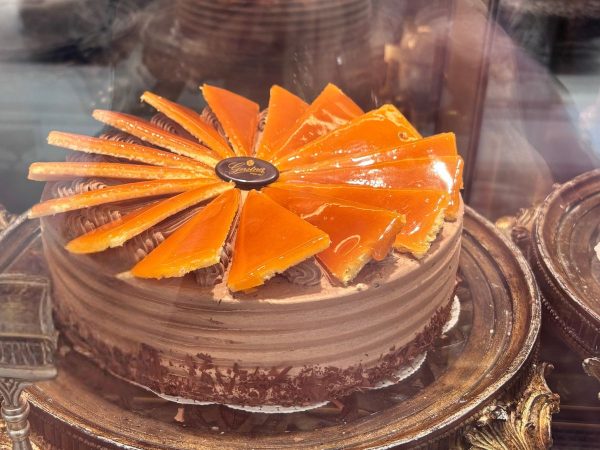
And when it comes to sweets, Austria does not disappoint. Sachertorte is a legendary chocolate cake with apricot jam, while Apfelstrudel, a flaky pastry stuffed with spiced apples and raisins, is my favorite.
Speaking of cafés, Austrian coffee culture is an experience in itself. Whether sipping a creamy Melange or indulging in a decadent Viennese hot chocolate, locals love to linger for hours.
And if you’re thirsty for something truly Austrian, try Almdudler, a refreshing herbal soda, or sample one of Austria’s famous beers or wines.
Cost of Living & Renting in Austria: What to Expect
Thinking about living in Austria for a while? Whether you’re moving for work, study, or just an extended stay, finding a rental is pretty straightforward, if you know where to look. Here’s a quick guide to help you out.
1. Online Platforms
If you’re looking for a rental from abroad, online platforms are a great place to start.
The Blueground offers flexible, furnished apartments in Vienna and beyond, while Booking.com, Expedia and Vrbo are good options.
I always ask for a better price if we’re staying for a month. For something longer, KURZZEiTmiete and tempoFLAT.at have furnished rentals with a minimum two-month stay.
Another affordable way to travel is through housesitting, check out TrustedHousesitters.com for opportunities.
Websites like HomeExchange.com and HomesForExchange.com offer a fantastic alternative to paid accommodation.
If you’re leaving your own home empty, why not swap it with someone else’s? Sometimes, you even get a car thrown into the deal.

2. Local Real Estate Websites
For a more traditional approach, check out Austrian real estate websites.
HousingAnywhere list apartments and houses for rent across Austria, while Sublet.com is another option for mid to long-term rentals.
These sites usually have listings in major cities like Vienna, Salzburg, and Graz.
3. Affordability & Cost of Living
Rental prices vary depending on the city and location. A one-bedroom apartment in Vienna can range from €800–€1,200, while a two-bedroom might set you back €1,100–€1,500.
Outside the capital, prices are usually lower.
Vienna itself has different price ranges depending on the district, Margareten and Alsergrund offer a balance of affordability and charm.

4. Other Resources
Don’t forget to check local Facebook groups and expat forums, people often post rental listings and tips there.
If you’re planning to rent long term, you’ll likely need proof of identity, an Austrian visa, and proof of employment or student status.
Be ready to pay a deposit, which is usually two to three months’ rent.
Before you book, read through these 7 vacation apartment rental tips, they cover everything we wish we’d known before our first long European stay.
No matter where you settle, Austria offers a fantastic quality of life, great public transport, beautiful cities, and of course, amazing coffee and cake. Happy house hunting.
| Flights | |
| Departure Locations | Price (Return, in €) |
| New York to Vienna | 1300 |
| Vancouver to Vienna | 1300 |
| Sydney to Vienna | 2300 |
| Auckland to Vienna | 2300 |
| London to Vienna | 270 |
| Accomodation | |
| Type | Price (per month, in €) |
| Rent (varies by location) | From 750 |
| Utilities (gas, water, electricity) | From 200 – 510 |
| Food Costs | |
| Item | Price Range (€) |
| Cappuccino (Capital City) | 3.60 |
| Big Mac Burger | 6.06 |
| Schnitzel | 8 |
| Palatschinken | 10 – 12 |
| Beer | 1.30 |
| Imported Beer | 4 |
| Cocktail | 11-15 |
| Almdudler | 8 – 10 |
| Glass of Wine | 8 |
| Loaf of bread | 2.25 |
| Eggs (Dozen) | 3.99 |
| Chicken Fillets (1kg) | 11.60 |
| Milk (1 Litre) | 1.50 |
| Water (1.5 Litres) | 0.75 |
| Potatoes (1kg) | 1.60 |
| Bananas (1kg | 1.90 |
| Transportation | |
| Type | Price (€) |
| Vienna to Salzburg (Train, one way) | 65 – 110 |
| Vienna to Salzburg (Bus, one way) | 49 – 55 |
| Vienna: One-way ticket (up to 75 min) | 2.50 |
| Vienna: Daily Pass | 8 |
| Vienna: weekly Pass | 22.60 |
| Petrol (per litre) | 1.60 |
| Entertainment | |
| Activities | Price (€) |
| Movie Tickets | 9 – 11 |
| Theatre Tickets | 12 + |
| SIM Cards and Data | |||
| Provider | Price Range (€) | Price Range (€) | Benefits |
| A1 | 32 (4 weeks) | 3G, 4G and some 5G | largest telco |
| Drei | 10 – 30 | Best 4G coverage | good urban network |
| Vodafone | 13 – 40 | 5G (including some rural areas) | Global network |
| Magenta Telekom | 10 – 30 | 5G coverage | Affordable with good customer service |
| eSIM (data only) | |||
| Provider | Price Range (€) | Data | Benefits |
| Airalo | 4.50 – 32 | 5G & LTE | Install before you leave home |
| YESIM | 25 | 10GB | We Just purchased yesim esims and becasue we bought 2 we got a 10% discount |
Cost of Living

You might find it amusing to include the cost of a Big Mac when discussing the cost of living in Austria, but there’s some economic wisdom behind it.
Economists often use the Big Mac as a benchmark for comparing living costs worldwide, a concept both clever and practical.
Since McDonald’s exists in nearly every corner of the globe, the price of a Big Mac varies by country, reflecting local purchasing power and affordability.
It’s a simple yet effective way to gauge the economic differences between nations, and yes, even in Italy, the iconic burger plays a role in this global comparison.
When we travel, we like to take a similar approach.
Instead of burgers, we pick a popular local dish and compare its price across different restaurants.
In Austria, our go-to benchmark meal was the classic Wiener Schnitzel.
This crispy, golden-fried veal cutlet, it’s a delicious taste of Austrian tradition and a perfect way to gauge local dining costs.
Plus, it gave us an excuse to indulge in Cutlets frequently, purely for research, of course! Whether it was a casual restaurant or a high-end cafe by the lake, comparing Wiener Schnitzel prices became a fun and tasty part of our Austrian adventure.
Rules for Schengen Visa

The Schengen 90 day rule If you’re a non-EU citizen planning to stay in a Schengen country like Austria for more than 90 days, you’ll need to apply for a residency permit.
The process can be lengthy, so it’s best to start early by checking the requirements on the Austrian Consulate in your country of residence.
The “Schengen Visa” allows tourists to stay up to 90 days in a 180-day period, but this visa is often not required for citizens from countries like the United States, Canada, and Australia.
However, starting in 2025, visitors from 60 countries will need to apply for an ETIAS (European Travel Information and Authorization System) visa waiver to enter Schengen countries for short stays.
If you’re planning to stay longer than 90 days, you’ll need a residency visa, or you could split your time between Schengen and non-Schengen countries like Ireland or Albania.
Tracking entry/exit dates is crucial to avoid overstaying your welcome.
There are a few app around that allow you track your stay down to the last day, a good one I would recommend is Schengen Cal 90/180. With careful planning and research, you can extend your time in Europe beyond the typical tourist limits

The Proven Way We Save Hundreds on Accommodation in Europe
The Proven Way We Save Hundreds on Accommodation in Europe. Accommodation in Europe: we saved…
Secrets to Finding the Best Bars in Split Croatia
Discover the best bars in Split Croatia, from Old Town cocktail spots to local favorites….
Amazing Restaurants in Split Croatia
Amazing Restaurants in Split Croatia Restaurants in Split: our guide to the seafood spots, konobas…
How to Find the Best Beaches in Split, Croatia
How to Find the Best Beaches in Split, Croatia How to Find the Best Beaches…
Authentic Villages in Santorini (Without the Crowds)
Authentic Villages in Santorini (Without the Crowds)Santorini has authentic villages that offer a quieter side…
Ljubljana, Slovenia: 14 Fun Things To Do And See
Ljubljana, Slovenia: 14 Fun Things To Do And SeeLjubljana, Slovenia at its best. 14 fun…